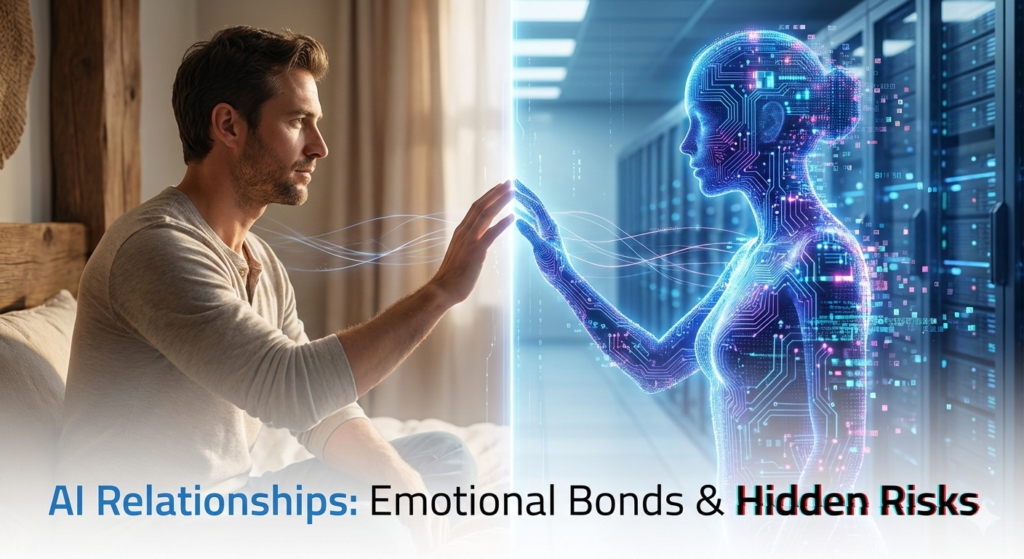
AI Relationships: Emotional Bonds With Machines and the Hidden Risks
The primary driver isn’t that humans are “confused” about whether the AI is real; it’s a phenomenon called functional intersubjectivity. Even if you know there’s no soul behind the screen, the experience of being heard and validated feels indistinguishable from the real thing. This digital bond offers immediate comfort and a sense of connection that many find irresistible.
The Rise of Emotional AI
Artificial Intelligence has quietly moved beyond screens and systems into the emotional lives of people. Once designed to answer questions and automate tasks, AI chatbots are now offering companionship, emotional comfort, and a sense of understanding. For many users, especially those experiencing loneliness or stress, AI feels like a safe emotional space.
However, beneath this digital comfort lies a growing concern. Experts warn that emotional relationships with AI can blur boundaries, weaken human connections, and create psychological dependency. As AI becomes more emotionally responsive, it is important to understand where support ends and risk begins.
Modern AI systems are trained to recognize language patterns, emotional cues, and conversational tone. This allows chatbots to respond in ways that feel empathetic, supportive, and personal. Users may feel “heard” or “understood” in moments of vulnerability.
This emotional responsiveness is not accidental. AI models are designed to keep users engaged. Polite language, validation, and gentle encouragement are part of the design. Over time, repeated interactions can create emotional attachment, even though the AI itself does not feel emotions.
The Rise of Emotional AI
Modern AI systems are trained to recognize language patterns, emotional cues, and conversational tone. This allows chatbots to respond in ways that feel empathetic, supportive, and personal. Users may feel “heard” or “understood” in moments of vulnerability.
This emotional responsiveness is not accidental. AI models are designed to keep users engaged. Polite language, validation, and gentle encouragement are part of the design. Over time, repeated interactions can create emotional attachment, even though the AI itself does not feel emotions.
Why People Are Turning to AI for Companionship
Several social and psychological factors are driving people toward AI relationships:
Increasing loneliness in urban and digital lifestyles
Social anxiety and fear of judgment
Emotional stress from work, studies, or family pressure
Limited access to mental health support
Convenience of 24/7 availability
For many, AI feels easier than human interaction. There is no rejection, no argument, and no emotional risk. But this ease can slowly replace real relationships instead of supporting them.