
Artificial Intelligence (AI) has rapidly become a part of our daily lives through smart home devices, educational tools, and digital assistants. Today, AI has also entered the world of children’s toys. From talking dolls and interactive robots to smart learning gadgets, AI-powered toys promise entertainment, learning, and convenience. However, behind their friendly voices and cute designs, experts warn that these devices may carry serious hidden risks that parents should not overlook.
What Are AI Toys and How Do They Work?
AI toys use advanced technologies such as voice recognition, machine learning, and internet connectivity to communicate with children. They can answer questions, respond to emotions, play games, and even adapt to a child’s behavior over time. While this makes them engaging and educational, it also raises important concerns about how much these toys know about children — and what they do with that information.
Potential Risks of AI Toys
1. Privacy and Data Safety
Many AI toys record conversations and send data to cloud servers for processing. If a toy’s security is weak, this sensitive information can be accessed, misused, or leaked. For children, this is especially dangerous because their personal data is extremely vulnerable.
2. Emotional Dependency
AI toys speak politely, respond instantly, and often show “empathy.” Children may form emotional bonds, leading to confusion between real relationships and artificial companionship. This may affect their social development if not monitored properly.
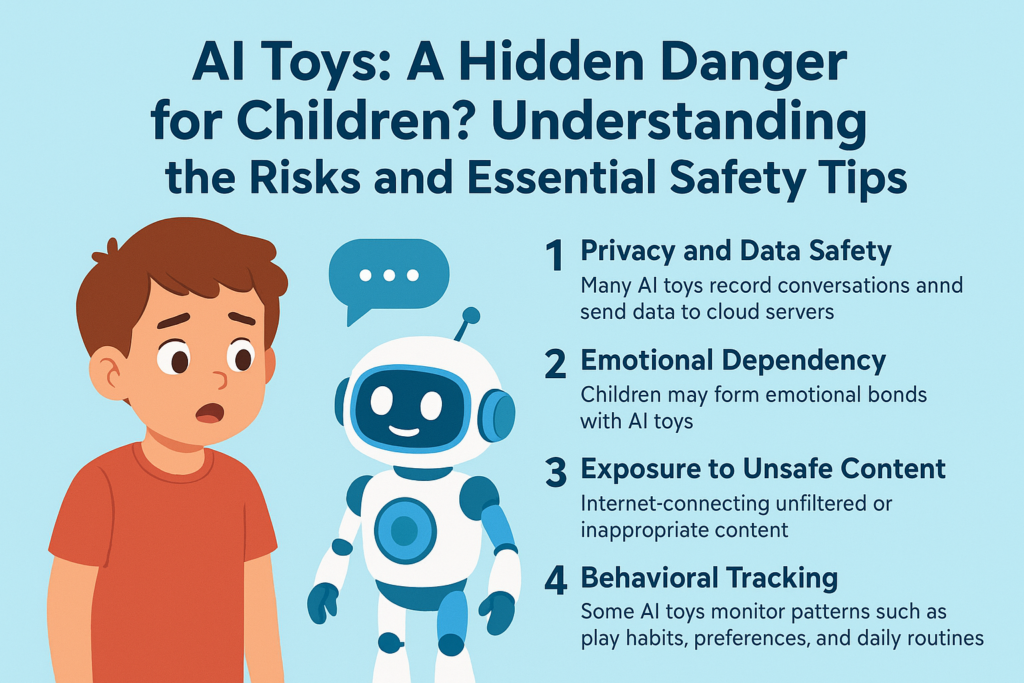
3. Exposure to Unsafe Content
Internet-connected toys risk accessing unfiltered or inappropriate content. A small glitch or poorly designed software can expose children to harmful information.
4. Behavioral Tracking
Some toys monitor patterns such as play habits, preferences, and daily routines. This data could potentially be used for targeted advertising or other unethical purposes.
The Growing AI Toy Market
Studies predict that by 2028, the global AI toy market may reach $300 billion. With this massive growth, many brands — including those with weak safety standards — will flood the market. Without strong regulations, parents must take responsibility for evaluating product safety.
Safety Tips for Parents
- Choose AI toys from reliable, certified brands only.
- Turn off unnecessary features like microphones, cameras, and GPS.
- Review privacy policies before purchasing.
- Monitor how your child interacts with the toy.
- Encourage offline activities and real-world social interactions.
Conclusion
AI toys can support learning and creativity when used wisely, but they also come with real risks related to privacy, emotional health, and online safety. The best protection for children is informed, attentive parenting and careful selection of technology.
1. What are AI-enabled toys?
AI toys are smart devices that use artificial intelligence to communicate, answer questions, and understand a child’s voice or actions.
2. Why can AI toys be risky for kids?
They may record conversations, influence emotions, encourage dependency, or expose children’s personal data to the internet.
3. Can AI toys affect mental health?
Yes. Over-interaction may reduce real social bonding, increase screen addiction, and disturb emotional development.
4. Are all AI toys unsafe?
Not necessarily. Reputed brands with strong privacy policies and offline modes are safer. Parents should always verify details before making a purchase.

Everyone loves what you guys are up too. This sort of clever work and exposure!
Keep up the terrific works guys I’ve incorporated you guys to blogroll.